
 EN
EN
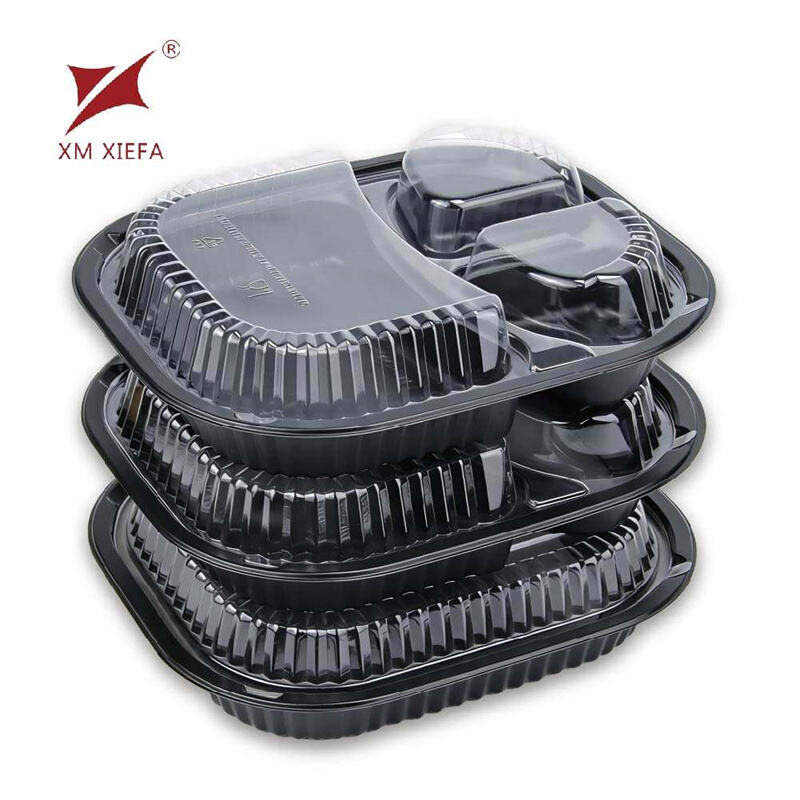
Food transportation is hard on disposable lunch boxes, especially for food service on airplanes, railroads, to remote sites, and for exporting food. They need to endure hours of vibration, temperature fluctuations, stacking pressure and humidity changes without compromising the safety, freshness and appearance of food. Lunch boxes that crack, leak or collapse on the way to school ruin the meal and the reputation of the food provider. Durability is not a choice, it's a necessity. These are the things that make a lunch box really durable to go long-distance.
Impact Resistance and Crush Strength
When lunch boxes are being transported long distances they are placed on high pallets, put in trucks or aircraft containers and moved back and forth during sorting and delivery. There is always the danger of impact and compression.
Products used to create durable lunch boxes should have a high impact resistance and crush strength. PP (polypropylene) is very hard. Flexible and does not crack under stress and will regain its former shape when released. PET (polyethylene terephthalate) is a very rigid and clear material, but it is a bit more brittle than PP at very low temperature. CPET is crystallized PET, which is heat-resistant and also has good impact resistance, providing great durability.
As well as material, design is important. A durable lunch box features with reinforced corners and ribbed side walls and a thick flange rim. The lid should fit snugly onto the base and not just "snap" lightly. Latch-style closures or deep edge engagers are some of the long-distance designs. After travelling 1000km by pallet a lunch box should arrive in one piece with no broken corners or lids.
Temperature Fluctuation Tolerance
Long distance food transportation is seldom performed at a single optimum temperature. A refrigerated truck's cooling system is operating. The temperature within an aircraft's cargo hold will vary during ascent and descent. The sun may shine on a delivery van while the driver is loading. Lunch boxes need to cope with these changes without warping, becoming brittle or breaking the seal.
PP has good performance in a wide temperature range (about -20℃ to +120℃). Will not become brittle under freezer temperatures and won't soften too much when warehoused at warm temperatures. PET can be used for chilled transport (not frozen) from -20°C to +60°C, and has good stability. CPET's temperature range is extended to -40°C to +220°C to meet the requirements for meals which are frozen and then oven reheated.
When using more than one mode of transport (truck to air and van), PP is often the most secure option. Buffers temperature changes without any measurable deformation, lids remain sealed and compartments are not damaged.
Moisture, Grease, and Condensation Management
Moisture can form during long-distance transport. When warm food cools in a box, condensation is created inside the box. During the transfer of goods between climate zones, humidity finds its way into packaging. Hot entrees will cause grease to flow towards the seals. All of these can lead to failure of the lunch box.
Durable lunch boxes are made of materials that is naturally impervious to moisture and grease. PP and PET are also water-repellent and do not absorb water, which means that they will not soften or lose strength if exposed to water. If the container is constructed from fiber based materials such as bagasse or paper a PLA or water-based dispersion coating must be used to prevent moisture and grease migration.
This also depends on the design of the ventilation. To transport hot food that will be cooked again later, small, well-placed vents release steam, while keeping contaminants out. If the food is offered after the meal is cold, then anti-fog clear lids are used to stop condensation blocking the view of the food, so the recipient isn't served a food-invisible food box.
Proven Quality Control and Certification
No matter how good the material and design, if the manufacturing quality is poor, it will not work. Thin spots, weak seals, or dimensional problems in any one batch of lunch boxes can destroy an entire shipment. When it comes to food transport over long distances, quality control is a must.
Xiamen Xiefa Vacuum Forming Packaging Co., Ltd. has established scientific and comprehensive quality management system, and has been strictly managed from the quality of raw materials to the finished products. The company has achieved and passed ISO 9001, BSCI, BRC, HACCP and GRS certifications from SGS. These certifications assure a complete record of every production run, testing of each batch and traceability of resin supplier to finished box.
The thickness of the material is the first thing to ask for when purchasing long distance food transport packaging, but it is equally important to ask for certification documentation. Confidence that lunch boxes will perform consistently across thousands of kilometers and hundreds of shipments comes from a supplier that offers their products certifications from SGS.
Summary
Long-distance lunch boxes must have four attributes: impact resistance and crush strength so that they will withstand handling and stacking; temperature resistance, meaning they won't warp by heat or cold; moisture and grease resistance, which will keep the seal intact during shipping; and proven quality control, with certifications from an established organization. Founded in 2009, Xiamen Xiefa Vacuum Forming Packaging Co., Ltd. is a manufacturer of lunch boxes in PP, RPET/PET, PLA, PS and other materials; and custom designs lunch boxes for long-distance transportation. Contact them today to discuss what kind of durability you need, ask for certifications and order samples for testing in your actual environment.