
 EN
EN
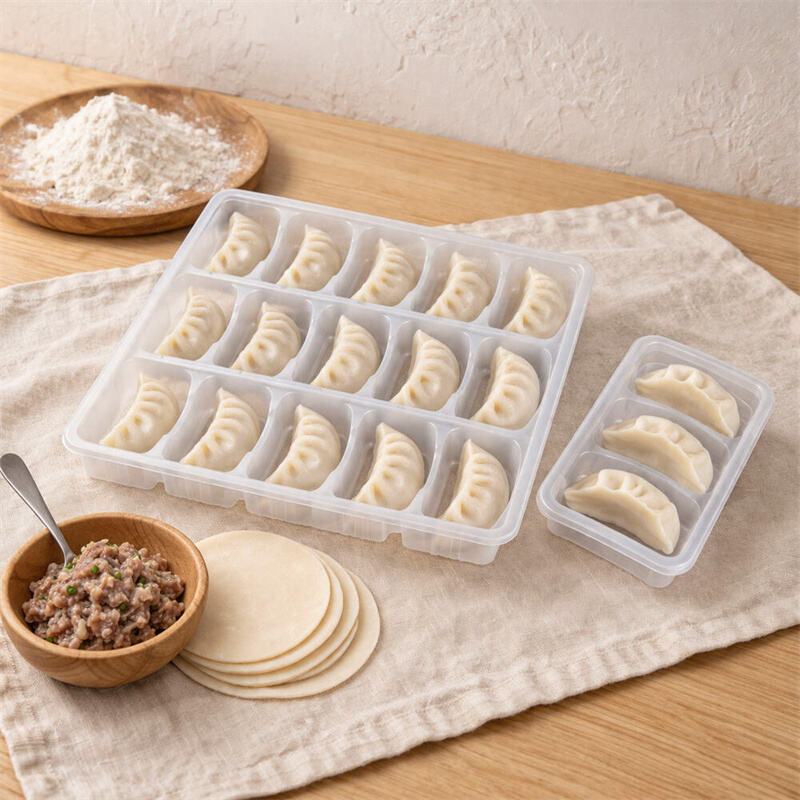
One of the most challenging food packages is the frozen food package. Containers need to withstand the temperatures as low as -40°C when it comes to storage and transportation and then move directly to the microwave or conventional ovens without cracking, warping or leaking. The incorrect material means that the customer complains, the product is returned and the brand reputation is damaged. It is crucial to have an understanding of what materials are needed when purchasing frozen food packaging for B2B buyers. The following are four key considerations to consider.
Low-Temperature Impact Resistance and Dimensional Stability
More frozen plastic packaging is frozen, more brittle it will become. Some materials are actually strong at room temperature but are not strong enough when they were dropped from a freezer shelf. So, first requirement of the packaging of frozen food is the resistance to low temperature. Even at -20°C or below, the material should be able to absorb shock without cracking.
The dimensional stability is also critical. When water in food freezes it expands. The packaging needs to be able to expand and not get distorted or burst. Warped containers do not perform well in freezer and can leak.
The properties of PP (polypropylene) are good at low temperatures, and PP is commonly used as the material for frozen ready meals. Another great option is CPET (crystallized PET) which can withstand freezing temperatures and can be placed straight from freezer to oven. The PS (polystyrene) is cheap but can become brittle at temperatures below 0°C and is suitable only for frozen foods that will be taken out of the container for cooking.
Temperature Range: From Freezer to Oven or Microwave
Many frozen meals are intended to be used straight out of the freezer to be heated in the microwave or conventional oven. This also requires that the packaging can withstand extreme cold and high temperatures without letting any harmful products escape or changing its shape.
As a result the temperature range of the material is important and a critical specification of this material:
CPET typically can withstand temperatures from -40℃ to +220℃, which is suitable for the dual ovenable frozen food trays.
PP range is from about -20°C to +120°C, which is suitable only for microwave-only frozen foods.
PLA (polylactic acid) has a low heat resistance (usually below 50°C), and cannot be used to make traditional frozen food, but can be used to make frozen desserts or cold foods.
Paper and bagasse can also be frozen, but usually require a plastic or PLA coating to maintain moisture barrier and structural properties when reheating.
The first criterion for B2B buyers to consider when selecting materials is the end method of heat, such as microwave only, conventional oven or both.
Seal Integrity and Barrier Properties
Foods in the freezer can be kept for months. The packaging must be able to withstand freezer burn, condensation and odor during this period. Seal integrity is of highest importance. Air infiltrates through a weak seal, causing condensation of ice crystals on the food surface and causing a loss of taste and texture.
The perfect frozen food packaging material should offer:
High moisture barrier to prevent sublimation (ice changing directly to a vapor).
Oxygen barrier to prevent oxidation and rancidity in fatty foods
Consistent heat-seal performance over all edges of the container
In combination with appropriate sealing films or lidding materials, PP and CPET provide great barrier properties. Bagasse coated with PLA or paper coated with thin bioplastics can be used as barriers for short term frozen storage (3-6 months) in a sustainable way. For long term frozen storage (12 months or longer) however, conventional plastics are presently better performers.
Compliance with Food Contact Regulations
There are strict food contact regulations in every target market that must be met when packaging food for freezing. Transfer of substances from package to food is not permissible. This is especially important if packaging will be heated because heat can cause migration to occur more quickly.
Reliable manufacturers have documentation to ensure compliance to:
EU Framework Regulation (EC) No 1935/2004 and specific EU plastics regulations.
US FDA 21 CFR (Food Contact Materials)
China GB standards for food contact packaging
Xiamen Xiefa Vacuum Forming Packaging Co., Ltd. has obtained ISO 9001, BSCI, BRC, HACCP, GRS and other certificates from SGS. The company has a strict quality control system, from raw materials to finished products, and has a strict after-sales service system. Xiamen Xiefa's product line includes frozen food packaging with excellent processing technology and is suitable for processing PP, CPET, PET, PLA and other materials, which complies with the requirements of international safety standards.
Summary
Materials used in frozen food packaging should be low temperature resilient, have a broad temperature tolerance range (freezer to oven), be robust to ensure a good seal and barrier properties, and meet food contact standards. CPET and PP are well established and dependable options for most ready meals for freezing. For shorter term and/or cold only uses, sustainable alternatives like coated bagasse or PLA could be considered. Founded in 2009, Xiamen Xiefa Vacuum Forming Packaging Co., Ltd., is a one-stop provider of custom-made frozen food packaging solutions with OEM and ODM service. To actually find out more about their requirements for temperature, barrier, and certification, please reach out to them today.